



Bridgewater Homeowners: What Those Dec. Wind Gusts Mean for Your Roof (And What to Check This Week)
Bridgewater News Desk — This week’s homeowner watch: After late-December wind alerts across Central Jersey, we’re still seeing the after-effects on residential roofs—especially loose edges and “almost invisible” shingle lifting. That matters in Bridgewater because wind-related roof issues often don’t show up until the next rain, thaw, or overnight temperature swing.
Key takeaways for Bridgewater homeowners
- Wind damage can be subtle: one lifted shingle can start a leak.
- Missing shingles are obvious; lifted/creased shingles are easy to miss.
- Common leak starters: flashing, pipe boots, ridge caps, vents.
- Soffit/fascia movement can signal wind got under the roof edge.
- New stains, bubbling paint, or damp attic insulation = don’t wait.
- Do your first check from the ground for safety, especially in winter.
- Exposed underlayment, multiple missing shingles, or impact damage = call a pro.
What happened in late December (and why it matters here)
Wind alerts in late December flagged gusty conditions across the region, with some advisories warning of gusts nearing 60 mph. For roofs in Bridgewater, that kind of wind can break shingle seal strips, tug at ridge caps, and loosen flashing—without leaving a dramatic mess in the yard.
Why that matters: Wind damage often becomes a water problem later. If a shingle edge lifts and doesn’t reseal, wind-driven rain can slip underneath and travel—so the stain you see inside may not line up perfectly with the damage above.
Wind damage roof inspection (Bridgewater, NJ): a 10-minute check from the ground
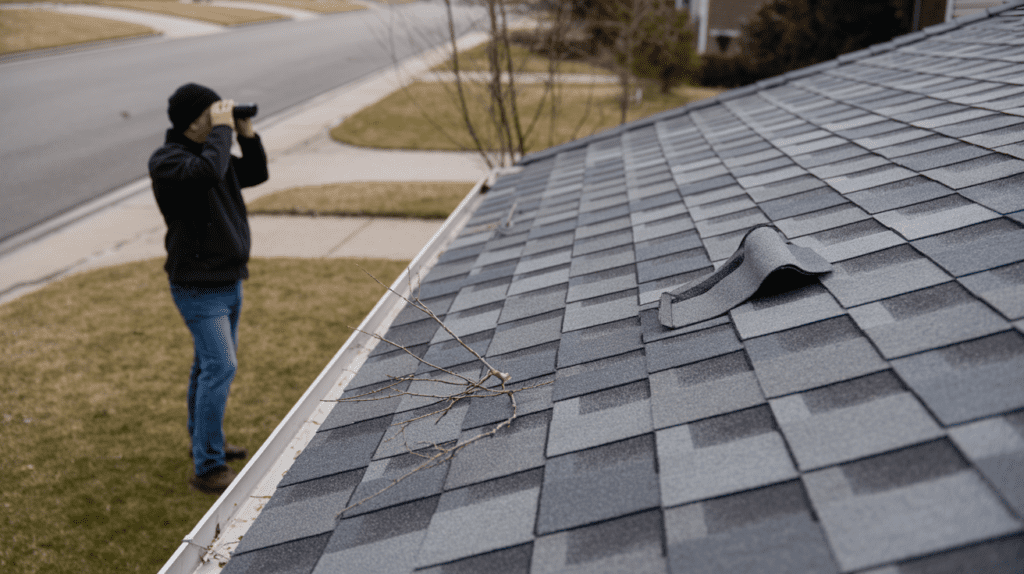
Safety disclaimer: Do not walk on your roof in winter, on wet surfaces, or when there’s frost/ice. Use binoculars or your phone’s zoom from the ground. Ladder work and roof access should be left to trained pros when conditions are risky.
Missing shingles vs. lifted shingles (what’s the difference?)
- Missing shingles: dark patches, exposed underlayment, or “broken” shingle rows.
- Lifted shingles: edges that look raised, wavy, or cast a thin shadow line.
- Creased shingles: a visible bend line where wind lifted the shingle and it snapped back down.
- Ridge cap issues: uneven caps along the peak, or caps that look shifted out of line.
Flashing, vents, and pipe boots: common leak starters
Even when shingles look “mostly fine,” wind can loosen the metal and rubber details that keep water out.
- Chimney corners and step flashing: look for lifting, gaps, or metal that looks bent.
- Pipe boots (plumbing stacks): older rubber collars can crack or pull away.
- Bathroom/dryer vents: check for tilted caps or missing covers.
Soffit/fascia and gutters: where wind damage shows up fast
- Loose soffit panels, popped vent panels, or new gaps at the roof edge.
- Fascia boards that look bowed, separated, or freshly shifted.
- Gutters pulling away or fasteners that look stressed.
Inside the house: signs of a roof leak after wind
- New ceiling stains (yellow/brown rings), especially near exterior walls.
- Bubbling paint or soft drywall.
- Attic insulation that feels damp or looks compressed in one spot.
- A musty smell upstairs that wasn’t there before.
What we’re seeing locally in Bridgewater-area roof checks
After windy stretches in Somerset County, we commonly find roofs that look “okay” from the curb but have small trouble spots up close: a handful of lifted tabs near the ridge, a pipe boot that’s starting to separate, or flashing that shifted just enough to create a pathway for wind-driven rain. We also see homeowners notice granules collecting near downspout exits—often a sign the roof took a beating from wind and temperature swings, even if shingles didn’t blow off outright.
Homeowner Action Checklist (what to do this week)
- Walk the perimeter and inspect roof planes with binoculars/zoom.
- Look for missing shingles, lifted edges, creases, or ridge cap shifts.
- Check the yard/driveway for shingle tabs, ridge pieces, or metal fragments.
- Check gutters and downspout exits for fresh granules (sand-like grit).
- Scan soffit/fascia edges for gaps, sagging panels, or loose vents.
- Look at chimney and vent areas for obvious flashing lift or bent edges.
- Inside: check ceilings and upper walls for new staining or bubbling paint.
- If safely accessible, check the attic for damp insulation, staining, or daylight.
- Take photos from the ground (helpful for repair planning and insurance).
- Re-check after the next rain—wind damage often reveals itself later.
When to call a pro (clear thresholds + safety notes)
If any of the triggers below apply, it’s time to bring in a professional inspection—especially in winter conditions.
- Active leak: dripping, spreading stains, bubbling paint, ceiling sagging.
- Multiple missing shingles in one area or exposed underlayment.
- Impact damage: tree/branch strike on roof, flashing, chimney, or skylight.
- Loose soffit/fascia/gutters that could detach and fall.
- Suspected flashing failure around chimneys, walls, vents, or skylights.
- Steep/high roofs or any roof that’s wet, icy, or unsafe to access.
Emergency note: If water is entering your home, treat it as an emergency roof repair situation.
Helpful next steps (Tetti Roofing resources)
- Storm damage roof repair (post-wind inspections and repairs)
- Emergency roof repair Bridgewater, NJ
- Roof leak repair (tracking and sealing leak sources)
- Shingle replacement (missing shingles, lifted shingles, ridge caps)
- Chimney flashing repair
- Gutter & downspout repair
- Roof repair in Bridgewater
- Annual roof inspections (catch issues before they leak)
FAQ: Wind damage roof inspection in Bridgewater, NJ
How do I know if my roof has wind damage?
Look for missing shingles, lifted/creased shingles, shifted ridge caps, loose flashing, or new interior stains after the wind event.
Can shingles be lifted without falling off?
Yes. Wind can break the seal and lift the edge without dropping debris, and that can still lead to leaks later.
What’s the most common “roof leak after wind” cause?
Flashing and roof penetrations (chimneys, vents, pipe boots) are frequent culprits, even when shingles look intact.
Is it safe to walk my roof to check shingles?
Not in winter or when the roof is wet, icy, steep, or high. Do a ground check and call a pro for close inspection.
What should I document for insurance?
Take clear photos of exterior areas (from the ground), interior staining, and any debris, plus dates of the wind event and discovery.
How fast should I replace missing shingles?
As soon as possible. A small exposed area can let water in during the next rain or thaw cycle.
What counts as an emergency roof repair?
Active leaking, exposed underlayment, impact damage, or loose materials that could fall are all urgent.
Do I need an inspection if I don’t see damage?
If your roof is older, you have any interior signs, or you’re unsure about flashing/vents, a professional inspection can catch hidden issues.
Local CTA: book an inspection or request emergency help
If you’re in Bridgewater or nearby service areas like Raritan, Somerville, Branchburg, or Martinsville, and you suspect wind damage, don’t wait for the next storm to “confirm” it.
Call or text Tetti Roofing to talk through what you’re seeing, or schedule an estimate. Need a faster response for active leaking? Use our Bridgewater emergency roof repair page to get the ball rolling.
Official resources (external links)
- NWS Philadelphia/Mt. Holly (forecast office)
- NOAA/NWS Damage Assessment Toolkit (DAT)
- NJ DOBI: insurance claims after storm (PDF)
- Bridgewater Township Emergency Notification Center
- NJ Consumer Affairs: Home Improvement Contractors
Disclaimer: This content is for general education. For safety, avoid roof walking in winter/wet conditions and contact a qualified professional for inspection and repairs.