



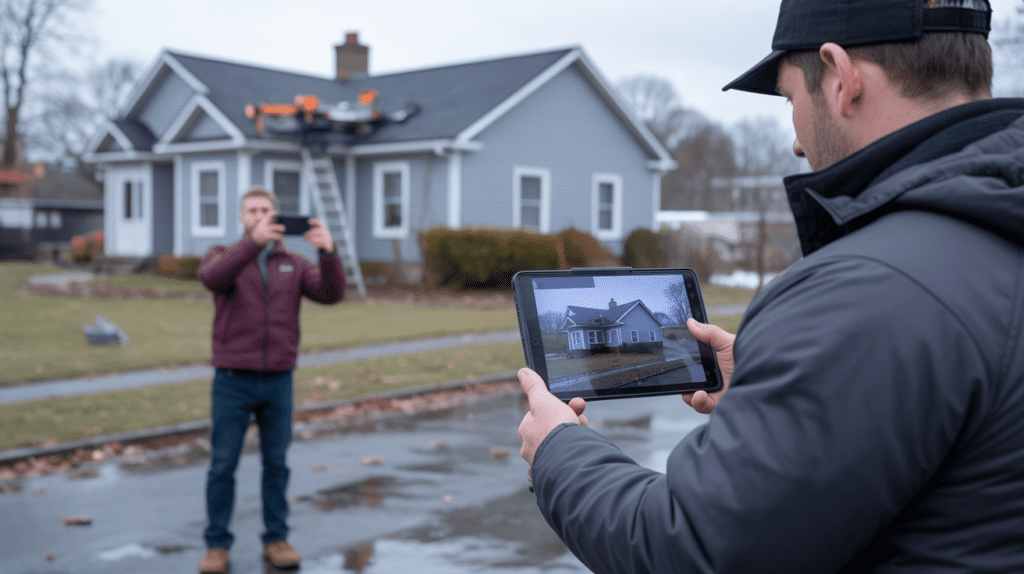
Photo-Checklist: 7 Roof Photos to Take for Insurance After Storm Damage in Bridgewater
Bridgewater homeowner update (this week): After recent storms in Central Jersey, the next step for many local homeowners is the same—document the damage fast, before cleanup and before the next round of weather changes what you can prove. NJ’s insurance guidance emphasizes prompt documentation, making temporary repairs when needed, and keeping records (including receipts), which is why your photos in the next 24–72 hours matter.
Key takeaways
- Photograph damage before cleanup and before any tarp work (if safe).
- Get a mix: wide shots + each roof side + close-ups (with a size reference).
- Don’t skip common leak points: chimney flashing, vents, pipe boots, skylights.
- Photograph interior stains/drips—they help show functional impact.
- If you make temporary repairs, save receipts and photograph the process.
- Skip risky roof walking—ground photos are better than an injury.
- A professional inspection report + drone documentation can create a clean, shareable claim file.
Before you start: safety + “temporary repairs” done the right way
Safety disclaimer: Avoid roof walking in winter and avoid ladders in wind, rain, or icy conditions. If you can’t take a photo safely from the ground, stop and call a pro.
Ground photos beat risky roof walking
You can capture most claim-ready photos from the driveway, sidewalk, backyard, or a neighbor-safe vantage point using your phone’s zoom. The goal is clarity and consistency—not heroics.
Temporary tarp basics (and what to save)
If water is actively entering the home, a temporary tarp may be needed to prevent further damage. If a tarp requires roof access, it’s usually safer to have a professional handle it. Either way, keep a record: photos of the leak area, photos after the tarp is installed, and receipts for any materials or emergency services.
Photo-Checklist: The 7 roof photos insurers actually use
Pro tip: Take photos in this order. It tells a clean story: what happened, where it happened, and what it caused.
Photo #1 — Wide shot of the whole house (all sides)
Stand back and capture the full exterior—front, back, and both sides if possible. This sets context and shows overall condition.
Photo #2 — Each roof slope (one photo per side)
Photograph each roof plane you can see: front slope, back slope, left/right slopes, plus the ridgeline if your angle allows. These are the “coverage” photos.
Photo #3 — Close-ups of shingle damage (with scale)
Zoom in on missing shingles, lifted shingles, creases, or exposed underlayment. If you can safely reach the area from the ground (often you can’t), include a size reference like a tape measure. If you can’t do that safely, skip it—don’t climb.
Photo #4 — Flashing + penetrations (chimney, vents, skylights)
These spots are frequent leak starters. Get clear images of chimney areas, vent caps, plumbing stacks (pipe boots), skylight edges, and any metal flashing you can see.
Photo #5 — Gutters/soffit/fascia + downspout exits
Take photos of gutters pulling away, dents, loose fascia, and soffit panels that shifted. Also photograph downspout exits where granules and debris often collect after a storm.
Photo #6 — Attic evidence (only if safely accessible)
If you can safely access your attic, photograph damp insulation, dark wood staining, or visible water tracks. Use a flashlight and avoid stepping into unsafe areas.
Photo #7 — Interior leaks (ceilings/walls) + any active dripping
Photograph ceiling stains, bubbling paint, wet drywall, and any dripping water. Include one “wide” room shot, then a close-up of the damage.
What we’re seeing locally in Bridgewater-area storm documentation
In Bridgewater claim situations, the biggest issue isn’t lack of photos—it’s missing the “connecting” photos. Homeowners often grab a tight close-up of one damaged shingle but forget the wide shot that shows which slope it’s on. Another common miss: documenting the exterior but skipping the interior stain that proves the damage affected the home. The strongest files are simple: every side of the roof, clear close-ups where safe, and a consistent set of interior photos if there’s a leak.
Homeowner Action Checklist (do this in the next 1–3 days)
- Create a folder: “Roof Claim Photos — [Date] — Bridgewater NJ”
- Take wide shots first, then work toward close-ups.
- Photograph every roof side you can see from the ground.
- Capture flashing/vents/skylights/chimney areas from safe angles.
- Photograph gutters, soffits/fascia, and downspout exits.
- Photograph interior stains/drips and note the room location.
- Save receipts and records for any temporary repairs or mitigation.
- If there’s active leaking or exposed areas, schedule a professional inspection quickly.
When to call a pro (clear thresholds + safety notes)
- Active leak (drips, spreading stains, ceiling sagging, bubbling paint).
- Exposed underlayment or multiple missing shingles.
- Tree/branch impact on roof, chimney, skylight, or gutters.
- Loose soffit/fascia/gutters that could fall.
- A roof that’s steep/high or conditions are wet, icy, or windy (skip ladders).
- You want a clean, shareable roof inspection report for your claim.
FAQ: Roof insurance claim photos in Bridgewater, NJ
How many photos do I need for a roof insurance claim?
Enough to show context and detail: wide exterior shots, each roof side, close-ups of damage, and interior photos if there’s a leak.
Should I take photos before I tarp the roof?
Yes—if it’s safe. Photograph the damage first, then document the tarp as a temporary repair. Keep receipts too.
What if I can’t safely photograph the damage?
Don’t risk it. A professional inspection (including drone documentation) can capture roof details safely.
Do I need interior photos if the damage is on the roof?
If there’s staining or leaking, yes. Interior photos help show functional impact and timeline.
What is “storm damage documentation” beyond photos?
Photos, dates, notes on what happened, and receipts for temporary repairs or mitigation work.
Can a roof inspection report help with my claim?
Often, yes. A clear inspection report organizes findings and supports your documentation.
Does drone video help with storm claims?
It can. Drone photos/video provide clear roof-surface evidence without risky roof walking.
Local CTA: Drone documentation + inspection report for Bridgewater claims
If you’re in Bridgewater and you need claim-ready documentation, Tetti Roofing can help you capture clear evidence safely—especially when roof access is risky. Start with our storm damage roof repair page, or book an inspection to get a professional set of photos and a report.
Want our differentiator? We offer drone storm damage assessment and drone roof inspections that help create a clean visual record. For claim support, you can also explore our insurance claim roof inspection and roof inspection report options.
Official resources (external)
- NJ Department of Banking & Insurance: Insurance Claims After a Storm (PDF)
- NJ DOBI: A Consumer Guide to Insurance and Natural Disasters (PDF)
- NJ DOBI: Office of Insurance Claims Ombudsman
- NJ Consumer Affairs: Verify a Contractor’s Registration
- Bridgewater Township Emergency Notification Center
Disclaimer: This article is for general education and documentation tips. For safety, avoid roof walking in wet/icy conditions and contact a qualified professional for inspections, tarping, and repairs.